
Congress in Gujarat Struggles Amid Leadership Vacuum, Weak Frontals, Demoralised Workers, and BJP Proximity Allegations
Congress Faces Leadership Crisis, Factionalism, and BJP Ties in Gujarat: AICC Observers’ Report The Congress party’s troubles in Gujarat extend far beyond election losses, with demoralised workers, absent leadership, and alleged proximity between some state leaders
Congress Faces Leadership Crisis, Factionalism, and BJP Ties in Gujarat: AICC Observers’ Report
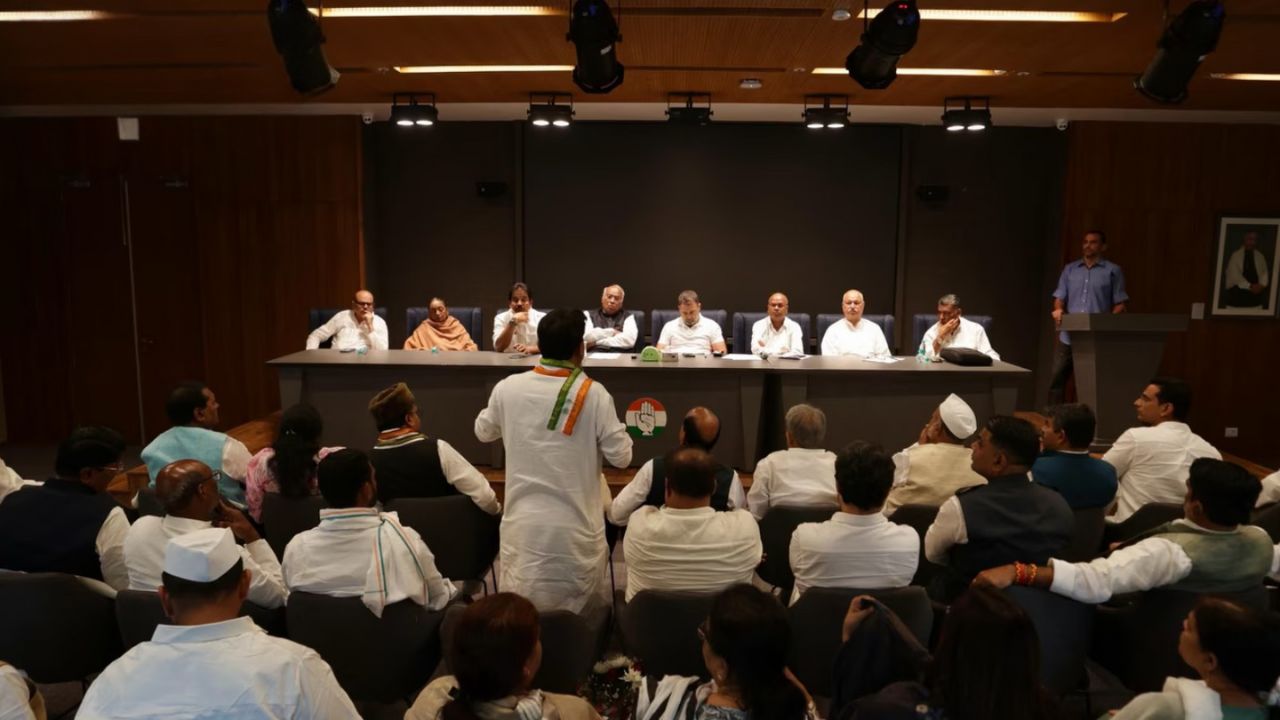
The Congress party’s troubles in Gujarat extend far beyond election losses, with demoralised workers, absent leadership, and alleged proximity between some state leaders and the BJP emerging as serious concerns. These issues were flagged by All India Congress Committee (AICC) observers tasked with overseeing the appointment of District Congress Committee (DCC) presidents across the state.
Part of a pilot exercise reportedly conceived by Leader of the Opposition Rahul Gandhi, a five-member panel — comprising one AICC observer and four Gujarat Pradesh Congress Committee (GPCC) observers — was assigned to assess and reorganise district units in a state where the party has been out of power for over 30 years.
After rounds of meetings across 41 districts, the observers submitted detailed reports to the party high command, highlighting persistent organisational shortcomings and growing worker disenchantment.
Key Issues Flagged by AICC Observers
Alleged BJP Nexus:
Several observers cited disturbing claims about ties between some local Congress leaders and the BJP. “I was shown photographs and other proof indicating proximity between Congress figures and BJP-RSS leaders,” one observer said on condition of anonymity. The issue echoed Rahul Gandhi’s comments during his March visit to Ahmedabad, where he accused some state leaders of collaborating with the BJP and suggested a possible purge of up to 30 individuals.
Leadership Apathy:
The central leadership’s prolonged detachment from Gujarat’s affairs was criticised for weakening the organisation and demoralising the cadre. “Many local leaders complained about the lack of guidance and support from the top, which has contributed to workers leaving the party,” one observer noted.
Factionalism and Infighting:
Almost all observers flagged internal factionalism as a key obstacle. “Though people are eager to work for the party’s ideology, factional leaders have obstructed grassroots initiatives and alienated loyal workers,” said an observer.
Ineffective Campaigning:
The party’s weak performance in the 2022 Assembly polls came under scrutiny, with observers noting poor mobilisation, disinterested candidates in certain districts, and inadequate on-ground presence — largely attributed to funding issues and absent leadership.
Administrative Pressure:
Observers alleged that a partisan police force and hostile local administration had created an atmosphere of fear, discouraging party supporters and deterring potential recruits. “Our cadre faces harassment, and some have even quit the party because of this,” one observer reported.
Inactive Frontal Organisations:
The absence of Congress’s frontal organisations — such as the Indian Youth Congress (IYC), National Students’ Union of India (NSUI), and All India Mahila Congress — was highlighted as another major gap. “These bodies are vital for protests, campaigns, and youth engagement but are practically invisible in Gujarat,” said an observer.
The Road Ahead
Sources said the high command will soon finalise appointments for new DCC chiefs, factoring in caste, gender, and generational representation. One-on-one meetings have already taken place in Delhi between AICC observers, Rahul Gandhi, and AICC general secretary (organisation) K C Venugopal.
The Congress’s showing in Gujarat has sharply declined, from 77 seats in 2017 to just 17 in 2022, with its vote share dropping to 27.75%. As the party moves towards a nationwide revamp ahead of future elections, reviving its Gujarat unit remains one of its most difficult challenges.